Memory Maker
App · UX/UI DesignMemory Maker is a UX/UI app concept designed to support Alzheimer’s patients and their caregivers. The experience focuses on preserving personal memories, strengthening day-to-day recall, and providing practical tools for caregivers across different stages of the disease.
Challenge
MemoryMaker, Inc. needed a comprehensive suite of app-based products and services that address the unique needs of Alzheimer’s patients and their caretakers. The solution had to support memory strength, preserve past memories, and provide effective caretaker tools across all stages of the disease.
Goal
Create an innovative, user-friendly app that combines memory preservation features with caretaker support tools, tailored to the varying stages of Alzheimer’s disease. The experience should be grounded in research, easy to use, and adaptable as patient needs change over time.
Solution
Memory Maker was designed as a blended experience: memory preservation for patients and coordinated support for caregivers. The product was approached in phases—starting with research and requirement definition, then concept development and wireframing, prototype building with visual design and branding, and finally usability testing and refinements.
- Memory preservation: organize life moments, photos, and prompts that encourage recall and recognition.
- Daily support: structured routines and simple assistive tools to reduce friction with everyday tasks.
- Caregiver toolkit: shared coordination tools, reminders, and resources to support caregiving workflows.
- Stage-aware UX: adaptable complexity and UI patterns to match disease progression and user capability.
Research Insights
As dementia progresses, patients can struggle with everyday tasks—remembering item locations, using objects correctly, and completing routine activities (e.g., making tea or getting dressed). The experience must reduce cognitive load, emphasize clarity, and reinforce routine and recognition.
Practical Memory Aids Considered
- Whiteboards for lists and reminders
- Large-faced clocks for easy reading
- Diaries and calendars for appointments and routines
- Automatic pill dispensers
Competitive Landscape & Inspiration
Research included reviewing established caregiver and cognitive activity apps to understand proven patterns, feature sets, and opportunities for a combined patient + caregiver experience.
- Carely (Caregiver): shared updates, personal support network, shared calendar, and local caregiving resources.
- Medisafe (Caregiver/Medication): medication reminders, refill prompts, interaction warnings, tracking, and reports.
- MindMate (Patient + Caregiver): cognitive activities, workouts, puzzles, stretches, and nutritional tips.
- Lumosity (Patient): research-based cognitive challenges for memory, reasoning, and speed via specialized games.
Key takeaway: existing solutions often serve either the caregiver or the patient well—Memory Maker focuses on integrating both roles into one cohesive, stage-aware experience.
Process
- Discovery: define user groups (patient + caregiver), core needs, and constraints by stage.
- Concepting: brainstorming, user flows, and wireframes for key journeys (memory capture, recall prompts, caregiver coordination).
- Prototyping: visual design + branding applied to a clickable prototype for core experiences.
- Usability testing: validate clarity, readability, interaction simplicity, and caregiver usefulness; iterate based on findings.
Wireframes
Early structure · layout exploration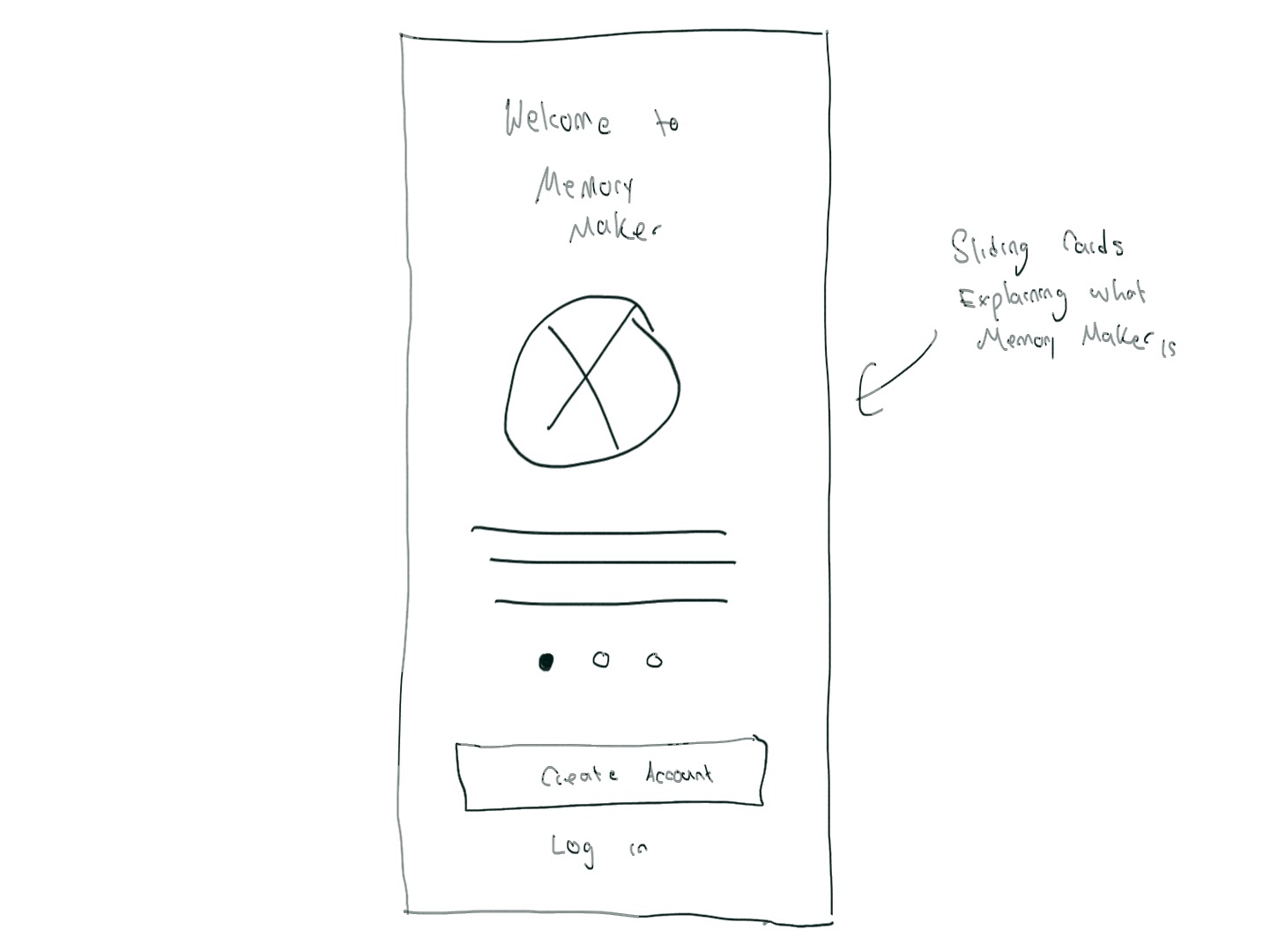
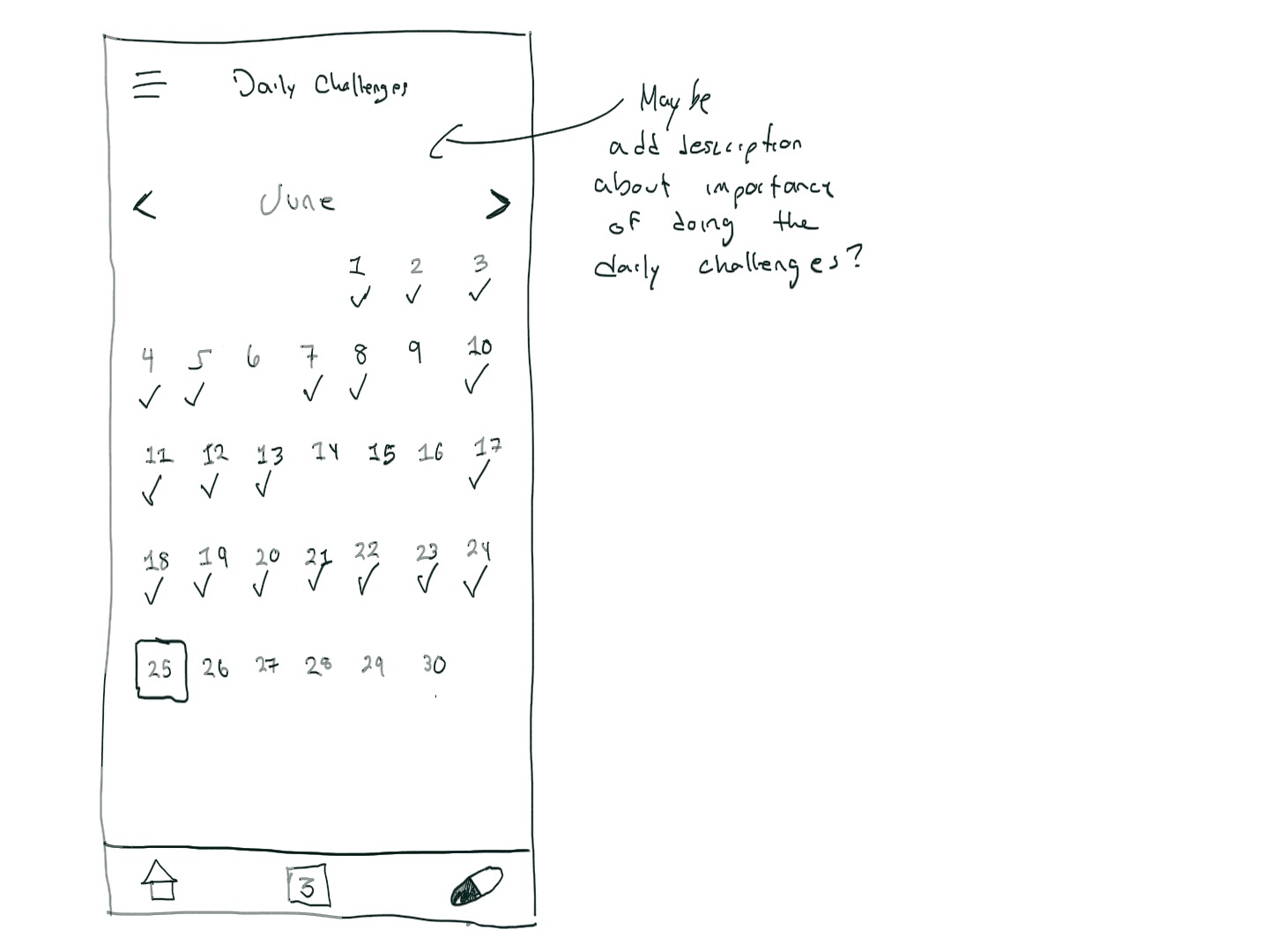
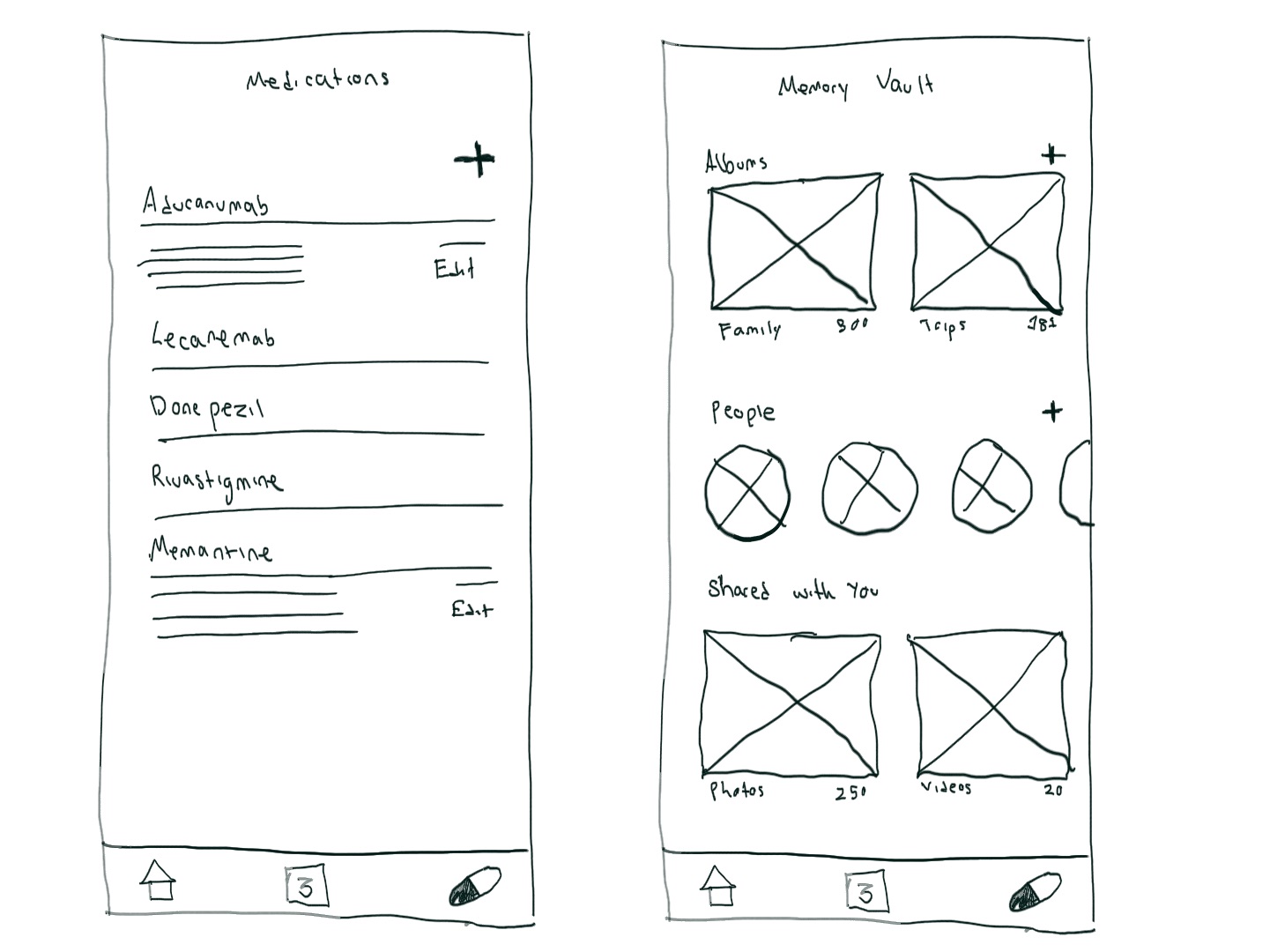
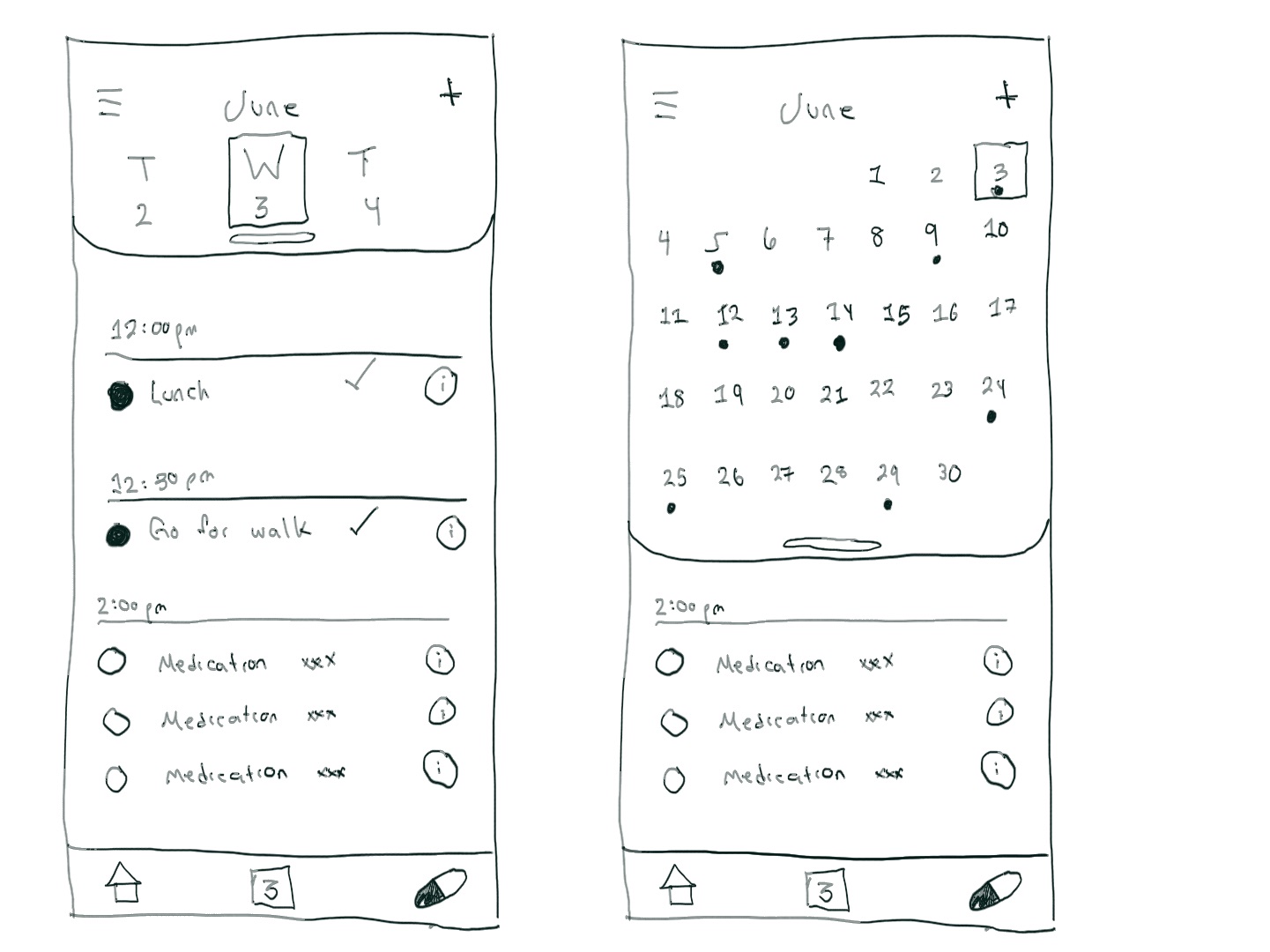
Results & Takeaways
- Clarity first: Alzheimer’s-focused UX benefits from reduced cognitive load, consistent patterns, and large, readable UI.
- Dual-audience design: caregivers need coordination tools while patients need simplicity—both must coexist without clutter.
- Stage-aware adaptability: the product should scale from guidance and routines to deeper caregiver-led support over time.